

Simple Taping Tricks for Plantar Fasciitis
Peake Physical Therapy responds to questions regarding taping for plantar fasciitis and shin splints. We see Colorado Springs athletes, hikers, and others regularly training for a race or exploring Colorado trails. Sometimes, a foot or shin can give out during your training. Plantar fasciitis and shin splints are two of the most common conditions we treat, and a question we hear often involves taping. We’ve provided some common answers to this issue so you know what works and can get back to what you love.
Table of contents
- What Is Taping and How Does It Help?
- What Types of Tape Do You Use?
- Which Tape Is Right for You?
- How Do You Tape for Plantar Fasciitis?
- How Do You Tape for Shin Splints?
- When Should You Tape vs. Seek Professional Help?
- What Are the Benefits and Limitations of Taping?
- Taping and Recovery Tips for Colorado Springs Athletes
- FAQs About Taping for Plantar Fasciitis
- Ready to Get Back on the Trail?
Estimated reading time: 6 minutes
What Is Taping and How Does It Help?
Taping is a therapeutic procedure where we apply adhesive tape to your skin. The tape is designed to support the muscles, tendons, and joints you use during your daily activities. It works by offloading and relieving strain on your overworked tissues, reducing pain and helping you perform with greater comfort and ease. Depending on the type of tape you apply, you may lift the skin to improve circulation and reduce pain signals, or apply the tape in a way that minimizes and inhibits movement to stabilize a compromised or painful region.
What Types of Tape Do You Use?
The two most common tapes we use are Kinesiology tape and Athletic tape. Kinesiology tape, or KT tape, stretches a lot, so you can use it while your body is moving. This tape is useful when you need to support your body while it’s active, when you need to take the weight off an injured area of your body, and when you want to control the swelling but still move around. Kinesiology tape gives you a full range of motion, so it will not stop you from running or hiking. Athletic tape is rigid and does not stretch, giving more stability to the area and reducing the motion more than kinesiology tape would. This kind of tape is helpful when you want to keep an injured area of your body in place, reduce movement, and reduce pain during physical activity.
Resource: healthline.com
Which Tape Is Right for You?
Kinesiology tape provides additional support without limiting your range of motion. Rigid tape provides more stability but limits motion in your injured area. If you’d like to try taping at home, you’ll need high-quality tape, sharp scissors, and clean, dry skin with no creams on your body.
How Do You Tape for Plantar Fasciitis?
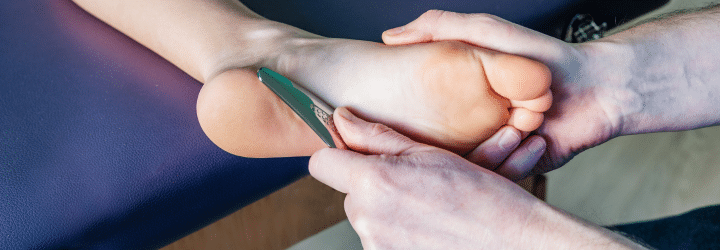
Plantar fasciitis often causes heel or arch pain that is worse with the first steps in the morning. Taping can support the arch and reduce strain on the plantar fascia. Apply tape to clean, dry skin, using strips around the heel and across the arch. Press it down smoothly without pulling too tightly. Kinesiology tape may stay on for several days, while rigid tape should be removed after activity.
How Do You Tape for Shin Splints?
Usually, shin splints present as an aching feeling along the front or medial side of your lower leg, typically after a long, demanding training session. Tape can be used to ease tension in the muscles in your shin and to provide additional structural support for tissues along your shin, so they are not absorbing the load by themselves. Apply the tape to clean, dry skin. Stick the tape to your ankle or the bottom of your shin first, then place tape over the site of injury, following the muscles. Stick the ends down and do not pull the tape too tight, since you will still need good blood flow. Over-tightening is the biggest issue we encounter when we see tape on patients, leading to cold or numb shins.
When Should You Tape vs. Seek Professional Help?
Taping can be an effective at-home approach for mild to moderate pain that eases with rest, and is a good choice if you understand the source of your injury or pain. There are certain situations we recommend getting evaluated before taping, though. If soreness increases, lingers for a week or more, or comes with swelling, numbness, or pinpoint pain, see a physical therapist. Any pain you’re unsure of is worth seeing. If you suspect a stress fracture, which presents as pinpoint, superficial bone pain, that must be seen.
What Are the Benefits and Limitations of Taping?
There are plenty of benefits to taping. It offers added support when hiking or running, temporary relief from pain, is inexpensive to buy, and once you get good at it, it is quick and simple to apply. For many in our local community, it makes the difference between having a rest day on the couch or a rest day out on the trail. That said, taping has its limits. It doesn’t correct the cause of pain. Its benefits are short-term, and poor tape application can lessen results and irritate skin.
Taping and Recovery Tips for Colorado Springs Athletes
Training at elevation can mean it takes longer to recover, and your body may require more rest than at lower altitudes. Allow yourself time to adapt and drink plenty of water. Establish a regular foot and lower-leg stretching and strengthening routine to help prevent common sports injuries.
FAQs About Taping for Plantar Fasciitis
Can I Tape My Foot for Plantar Fasciitis at Home?
Yes, you can tape your foot for plantar fasciitis at home, and many of our patients do it successfully. Ensure your skin is clean and dry and that you’re placing the tape correctly across the arch to provide plantar fascia support, but don’t tape too tightly. We recommend having a professional show you how to tape it properly first, since proper application helps taping work much better. Persistent foot pain despite taping may indicate an issue that needs to be treated at the root.
Resource: my.clevelandclinic.org
How Long Does KT Tape Last for Shin Splints?
Expect the tape to remain for three to four days. It should be removed after this period to allow the skin to dry and air out, rather than keeping it on for five days through heavy exertion. If you experience any skin irritation, redness, or itchiness, remove the tape sooner. Re-tape as you continue your efforts to resolve the cause of your shin pain.
Is Athletic Tape or KT Tape Better for Arch Pain?
Low-Dye taping, which is rigid zinc oxide tape, is the material that is preferred for plantar fasciitis and the one with the most supportive evidence. Kinesiology tape is another common choice, which is less rigid and provides support. KT tape is useful if you want to feel some supportive pressure in your arch but still want your foot to move and bend. You will see some athletes putting it on together.
When Should I See a Doctor Instead of Taping?
Seek professional care when pain is escalating, not improving after a week or two of treatment, or if pain is accompanied by swelling, numbness, or focalized sharpness.
Ready to Get Back on the Trail?
Peake Physical Therapy treats athletes to help them recover, become stronger, and then get back to doing what they love. If your foot or shin pain is keeping you from doing what you want, contact us and schedule your evaluation. We would love to help you run and walk pain-free and safely back to the trails.