Peake PT & Nevermore CrossFit Turf Wars
Peake Physical Therapy is a proud sponsor of Nevermore CrossFit Turf Wars. We treat CrossFit athletes across Baltimore County (including shoulder, low back, knee, and elbow problems) with one-on-one care from a doctor of physical therapy who stays with you from evaluation through return to full training.
Turf Wars and Peake PT
Four reasons why Baltimore CrossFit athletes choose Peake PT …
1. The same therapist, every single visit
You won’t rotate through different clinicians or explain your injury from scratch each week. You’ll work with one PT who learns how you move, what you’re training for, and what your competition prep looks like.
2. Board-certified and fellowship-trained clinicians
Our clinicians hold advanced credentials that go well beyond entry-level licensure. That means you receive care grounded in current evidence and clinical expertise — not a generic protocol pulled off a shelf.
3. Sport-specific return-to-training criteria
We don’t discharge athletes based on a calendar date. We use objective, movement-specific benchmarks to determine when you’re genuinely ready to load back up — and to reduce the risk of re-injury when you do.
4. Clinician-owned. Athlete-focused.
Peake is owned and operated by clinicians. Treatment decisions are driven by clinical reasoning and your goals — not volume targets or productivity quotas.
Injuries we treat
Shoulder pain — overhead and gymnastics work
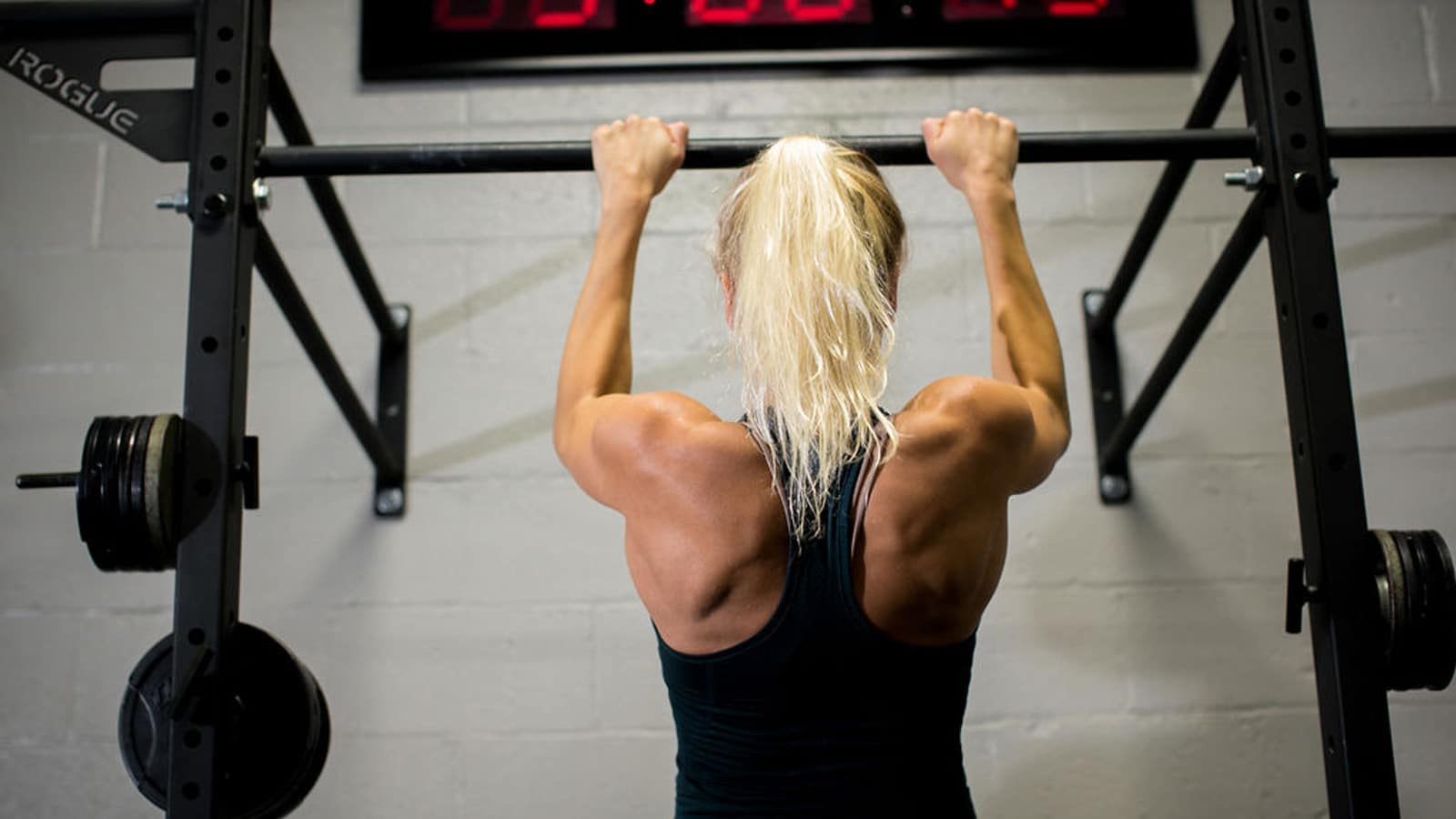
Snatches, jerks, pull-ups, and muscle-ups load the shoulder overhead, repeatedly, often under fatigue. We assess shoulder mobility, scapular control, rotator cuff strength, and mechanics through the full range of overhead and kipping movements — not just range of motion in isolation.
Low back pain — deadlifts, cleans, and high-rep pulling
High-rep posterior chain work is unforgiving of form breakdown, and the low back often picks up the difference when the hips and hamstrings fatigue. We evaluate hip hinge mechanics, bracing strategy, and load tolerance to identify what’s actually driving the pain — not just the sore spot.
Knee pain — squats, box jumps, and landings
Patellar tendinopathy is common in athletes doing high volumes of squatting and jumping. Rest alone rarely resolves it. We use progressive tendon-loading protocols — the approach supported by the evidence — to reduce pain, restore function, and build the capacity your training demands.
Elbow, wrist, and grip
High-volume pulling, kipping pull-ups, and heavy grip work load the elbow and wrist more than most athletes expect. We assess tendon load tolerance, grip and forearm strength, and movement mechanics to build a plan that gets you back to full training volume, not just pain-free at rest.
Landing mechanics and ACL injury risk
Box jumps and high-rep jumping work carry real ACL injury risk, particularly for female athletes — but that risk is trainable. We assess landing mechanics, hip and knee control, and neuromuscular patterns, then build a targeted plan, whether you’re recovering from ACL reconstruction or working to reduce your risk.
Training load and overtraining
Sometimes the issue isn’t one specific movement — it’s cumulative load across class programming, personal accessory work, and competition prep stacking up faster than recovery can keep pace. We help you see the total picture and build a plan that lets you keep training instead of shutting it down.
A note on rhabdomyolysis
Extreme training volume, especially after time off or in a brutal WOD, carries a real risk of rhabdomyolysis. Dark, tea-colored urine, severe muscle swelling, and unusual weakness after training are not normal soreness — they warrant prompt medical attention, not a wait-and-see approach. If you’re ever unsure, get it checked.
When to get checked out
Many athletes wait too long to seek care. Consider scheduling an evaluation if you’re experiencing any of the following:
- Pain that has lasted one to two weeks or longer, or pain that returns every training block
- Pain that is changing how you move — avoiding a movement, favoring a side, a lift that suddenly feels different
- Recurring swelling in a joint after training
- Numbness, tingling, or weakness in an arm or leg
- Pain that wakes you up at night
- A joint that’s been reinjured more than once
We would much rather see you early for something small than late for something you’ve been training around for a full competition cycle.
What care at Peake looks like
- A full evaluation with a doctor of PT: Your first visit is a comprehensive, individualized assessment — not a rushed intake. The evaluating clinician will be the same specialist throughout your entire plan of care.
- A plan that accounts for your training: We factor in your programming, competition prep, and training schedule when developing your plan. The goal is to keep you training where possible while addressing the underlying problem.
- Progressive loading over passive rest: Rest has its place, but tissue heals, and athletes improve through appropriate, progressive loading. Our plans are designed to build capacity — not simply reduce symptoms.
- Objective return-to-training criteria: You return to full load when you meet measurable benchmarks specific to your movements and goals, not when a fixed number of visits has passed.
- Clear communication throughout: We communicate directly with your coach or box, so everyone involved in your training is working from the same information.
Download the CrossFit Athlete’s Guide
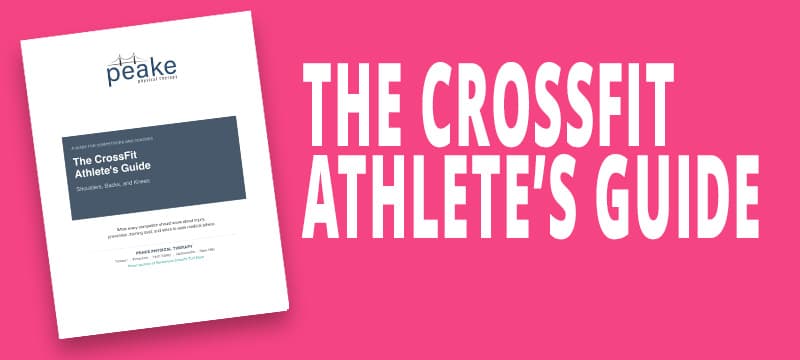
Shoulders, Backs, and Knees
Download our free guide covering the most common CrossFit shoulder, back, and knee problems, warm-up and strength work that reduce injury risk, how to manage training load across a competition cycle, and the signs that mean it’s time to get checked out.
Frequently asked questions
Do you accept insurance?
Yes. Peake Physical Therapy accepts most major insurance plans. If you have questions about your specific coverage, contact the location nearest to you, and our front desk team will verify your benefits before your first visit.
How quickly can I be seen?
We work to schedule new evaluations as promptly as possible. Contact us directly, and we will find the earliest available appointment at the most convenient location.
Do I have to stop training while I’m being treated?
Not necessarily. In many cases, athletes continue to train and compete with modifications while undergoing physical therapy. That decision depends on the nature and severity of the injury and will be made collaboratively with you and your PT.
Will you coordinate with my coach or box?
Yes. We routinely communicate with coaches and gym owners when it’s useful to your recovery. We want your training team working together, not in parallel.
Do you treat athletes who have had surgery, including ACL reconstruction?
Yes. Post-surgical rehabilitation — including ACL reconstruction — is a core part of what we do. We follow evidence-based rehabilitation protocols and use objective return-to-sport criteria before clearing any athlete to resume full training.
Ready to get the care you need?
Request an evaluation at any of our five Baltimore County locations. One-on-one care. The same PT every visit. Movement-specific criteria for getting back to full training.